Manufacturing Engineering

Engineering competence throughout the production lifecycle
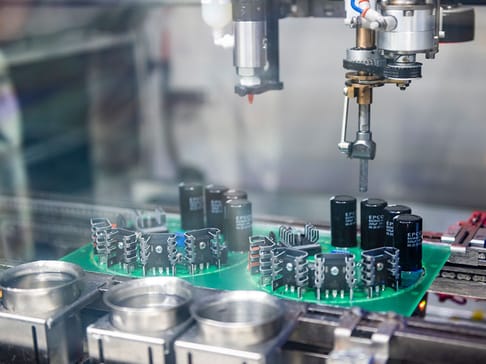
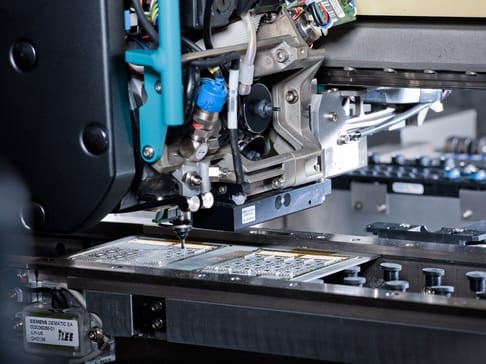
A close-up view of a precision machining tool working on a metal surface. The tool features various components, including wires and connectors, and is positioned above an intricate metal plate on a conveyor-like mechanism.

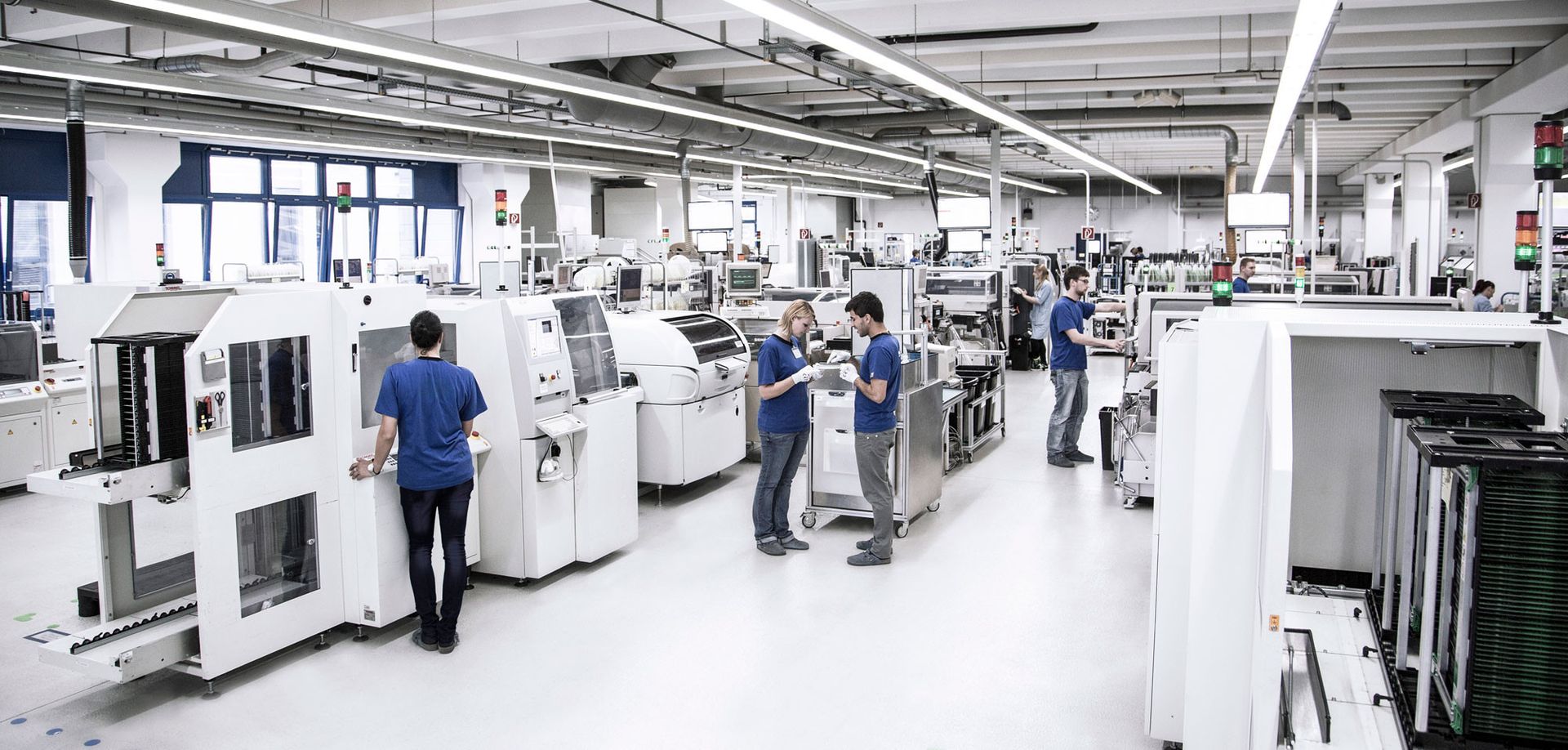
SMT Production

Our state-of-the-art SMT production lines guarantee the precise assembly of electronic components. The process begins with solder paste printing. A stainless steel template ensures the solder paste is placed exactly where it should be. The solder paste application is then automatically checked optically. High-precision placement machines then place SMT components up to size 01005 onto the PCB.

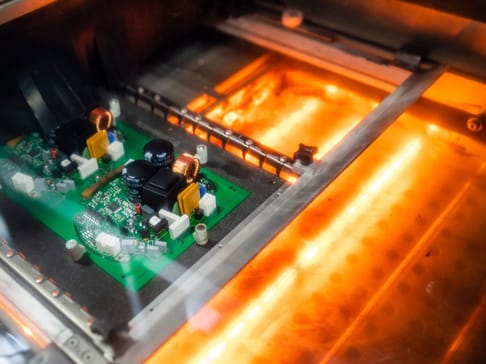
Before soldering, we carry out an inspection to ensure the components are correctly positioned and oriented. Reliable soldering takes place in the reflow oven. An automatic optical inspection follows to ensure the highest soldering quality.
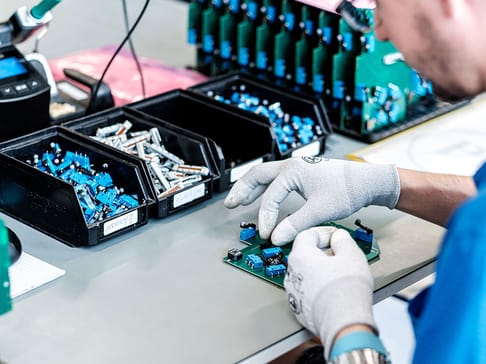
A person wearing gray gloves assembles electronic components on a green circuit board at a workbench. Nearby, there are organized bins filled with blue connectors and other parts. Tools and equipment are visible in the background.

THT Production

Our THT production lines reliably assemble PCBs with through-hole components. The process begins with manually placing the components through the PCB.

During wave soldering, the PCB passes over liquid solder to create secure electrical connections. Critical inspections ensure the quality of the solder joints. Finally, our comprehensive testing procedures ensure that our production meets the highest standards.

Two circuit boards are placed inside a machine with glowing orange lights, indicating a heating process. The environment appears industrial, with heat being applied to the components on the boards.

Soldering Process

To meet various requirements, our production uses the following soldering processes: Reflow soldering is used for SMT components and wave and selective soldering is used for THT components. Selective soldering is preferred for complex, mixed-component assemblies.

With selective soldering, solder joints are programmed individually and soldered automatically with pinpoint accuracy. This minimizes the thermal load on sensitive components and reduces the need for rework. This allows us to solder specific areas without affecting other components.

A automated robotic arm assembling electronic components on green circuit boards in a manufacturing environment.

Surface Protection

We offer a comprehensive range of surface protection solutions for your electronics, including brush coating for precise applications and small batches, fully automatic spray coating for consistent coverage in larger batches, and dip coating for intricate shapes.

Thick-film coatings provide extra protection for higher coating thickness requirements. Nano-coatings protect against moisture thanks to their thin layer and hydrophobic properties.

Bubble-free potting protects against mechanical and environmental influences.

Get to know our team!

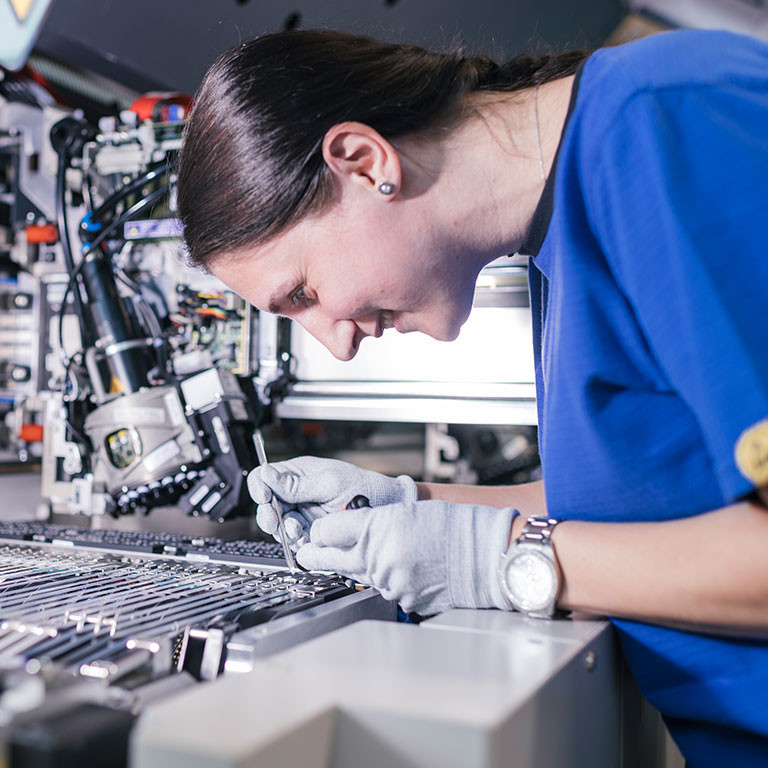
A woman wearing blue gloves and a blue shirt focuses intently while working on a machine, using a small tool to assemble or adjust components.

Assembly Technician

Amra

"In the final step, I also manually check the pick-up positions and polarities of the SMD components when changing products. Each manual intervention requires maximum precision because the microchip connections are often very close together."

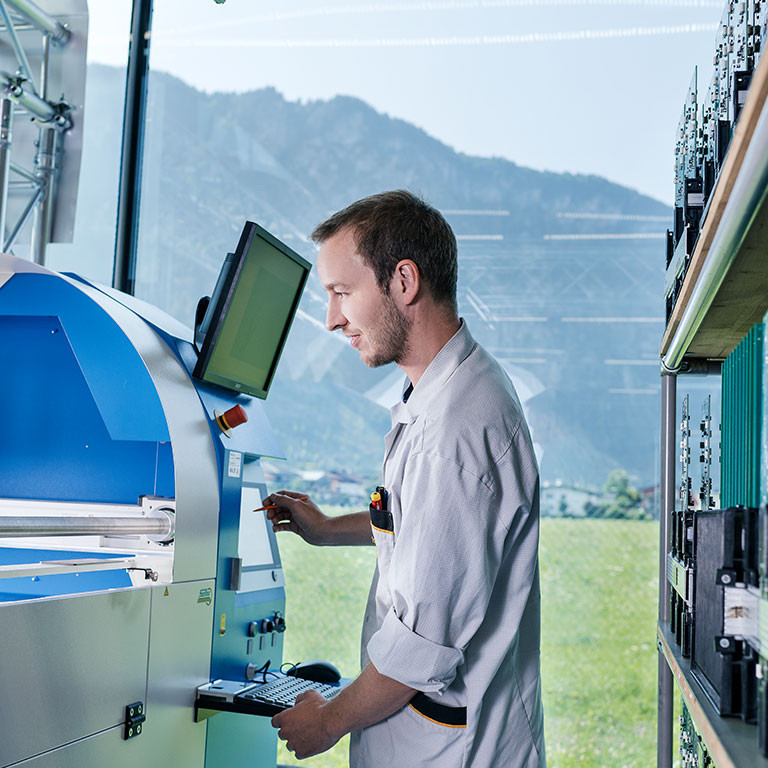
A man in a lab coat operates a high-tech machine with a monitor in a bright, modern space, surrounded by machinery and a scenic mountain view outside.

Process Engineer

Andreas

"When introducing new production technologies and machinery, we focus on achieving optimal production parameters and meeting our productivity and quality goals.Seamless integration and maximum efficiency require precise adjustments and continuous monitoring."

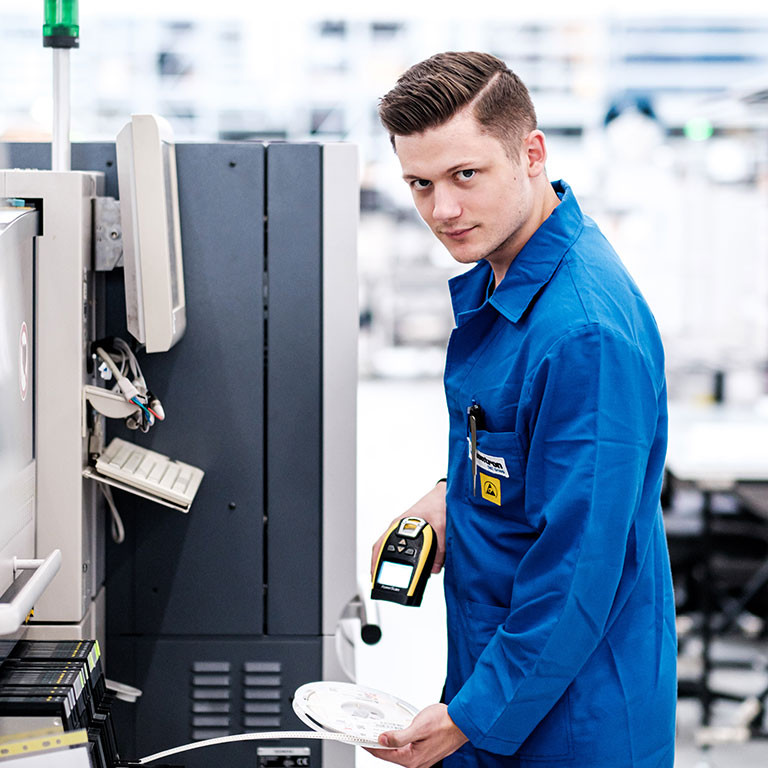
A technician in a blue uniform stands at a workstation, holding a circular object and scanning it with a hand-held device. The background features machinery and equipment typical of a manufacturing or laboratory setting.

SMT Operator

Josef

"As SMT operators, we perform a variety of tasks on the SMT line. We operate SMT machines, set up placement machines, and manage stencil printers. We are also responsible for monitoring product quality, performing maintenance, and optimizing production processes."

We’re Here for You

We’re Here for You

Kontron logo