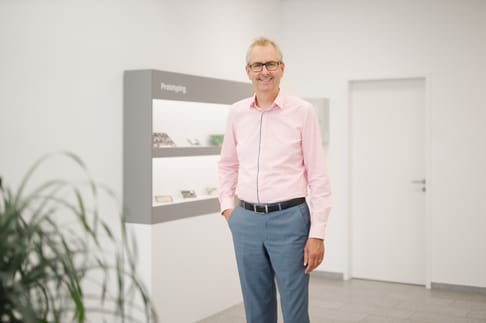
Andreas Klinger is a Business Development Manager with over 30 years of experience in the electronics manufacturing industry. At beflex electronic GmbH since 2020, he has shaped the development of the Hamburg location. His expertise in customer consulting, NPI process control, and innovation management supports customers in demanding prototyping and small series projects.
Electronics prototyping in comparison: The right way for your product idea
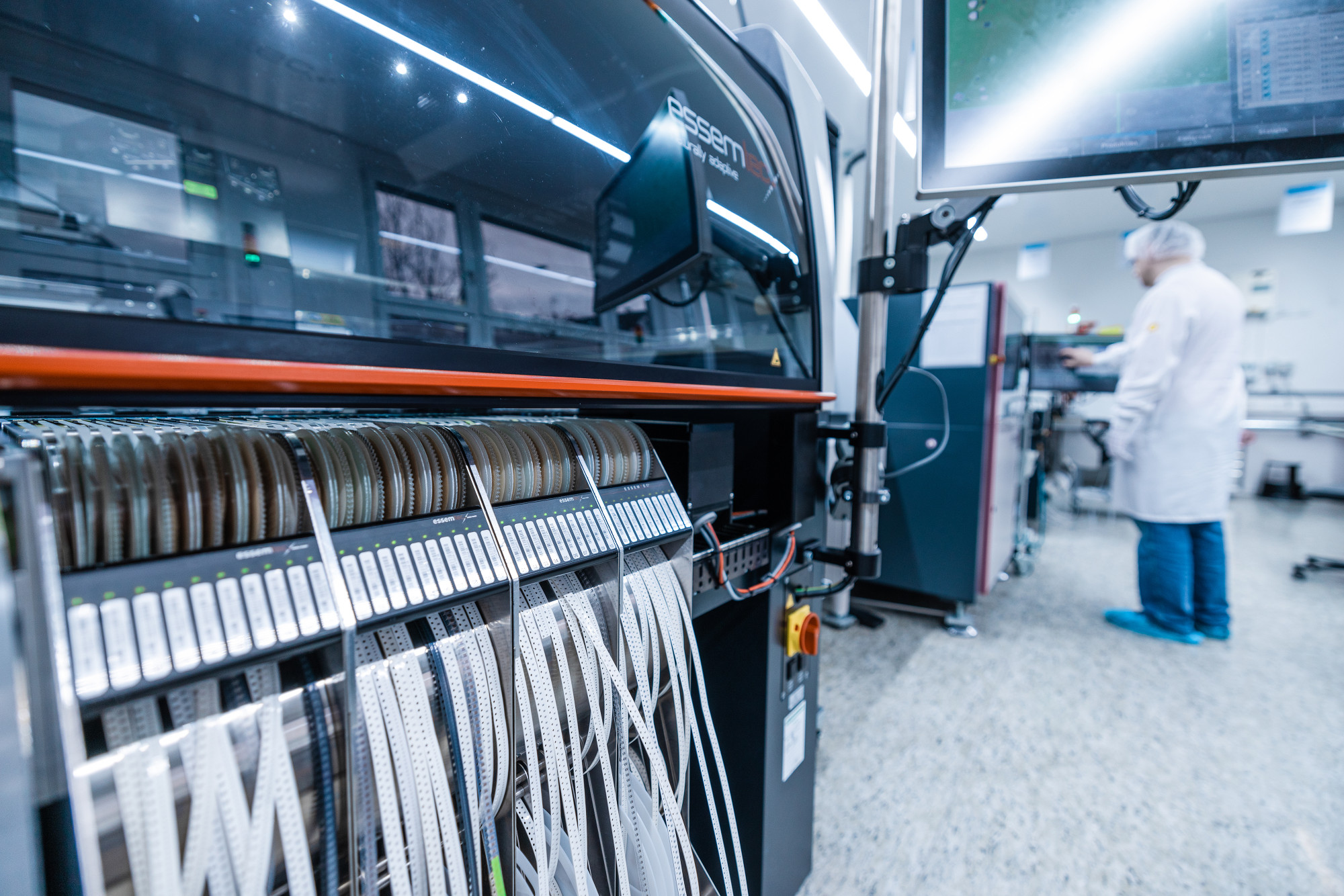
In modern electronics development, one thing counts above all: time-to-market. Companies are under pressure to bring innovative products to market quickly and efficiently to remain a step ahead of the competition. A central strategic decision here is the choice of the right prototyping approach: classic prototyping or rapid prototyping. But what is the difference between the two methods, and when does which one make sense?
Mr. Klinger, in electronics development, companies often face the choice between rapid prototyping and classic prototyping. What are the key differences?
Andreas Klinger: While classic prototyping aims at near-series production, validation and compliance, rapid prototyping focuses on rapid implementation, high design flexibility and the possibility of incorporating user feedback at an early stage. The choice of the appropriate process depends heavily on the respective development phase as well as the technical and regulatory requirements.
What are the risks when companies choose the prototyping process that is unsuitable for their project – and how can such wrong decisions be avoided?
Andreas Klinger: Choosing the wrong prototyping process can have far-reaching consequences, both technically and economically. If, for example, rapid prototyping is used in a late development phase, the necessary suitability for series production and regulatory security is often lacking. This can lead to delays in approval or even cost-intensive rework. Conversely, classic prototyping can lead to rigid development processes in early phases, which leave little room for creative iterations. Design changes are more complex and expensive, which can slow down progress and undermine the project’s competitive edge, especially in the case of innovative projects. To avoid such wrong decisions, a well-founded needs analysis is crucial, ideally in close coordination with experienced development partners.
Can you give a specific example where rapid prototyping was highly beneficial?
Andreas Klinger: One compelling example stems from a collaboration with a young company driving the industrialization of AI solutions. The team was under considerable time pressure and needed a fully functional prototype for a complex sensor unit, including electronics, housing, and interface integration, within a few days. Thanks to the rapid prototyping approach, a ready-to-use sample could be delivered within a week, mapping all the basic functions. The fast availability enabled the customer to immediately run initial tests, collect valuable user feedback, and iteratively improve the design. Thanks to the high speed and flexibility of the process, internal development cycles were significantly shortened, allowing the client to present investors with a tangible result at a very early stage.
Was there a project where classic prototyping was crucial for subsequent series production?
Andreas Klinger: One excellent example comes from a project with a customer from the MedTech sector, which was about to start series production. At this stage, a classic validation pattern was necessary to ensure compliance with regulatory requirements, especially regarding patient safety and documented traceability. The requirements in the MedTech sector are complex and always require close coordination between the customer, possibly a specialized layout office, and the prototype manufacturer. Through targeted design and layout optimizations, it was possible to produce near-series samples that not only met the technical specifications but also successfully passed the regulatory testing processes. These samples shaped the basis for approval and allowed a smooth transition to series production. Classic prototyping was crucial here, as it ensured not only technical maturity but also formal certainty for market entry.
Can you systematically summarize these technical differences between rapid and classic prototyping?
Andreas Klinger: Yes, absolutely. The following table clearly presents the differentiation criteria:
Rapid Prototyping | Classic prototyping | |
Lead time | A few days | Weeks to months |
Objective | › Concept test › Early Feedback › Design Optimization | › Validation › Compliance with standards › Close-to-series production |
Deployment phase | › Early stage › Concept Verification | › Late stage › Pre-series |
Choice | Alternative components, quickly available | Close to series production, or BOM compliant |
Flexibility | High | Small |
Costs | › Low entry costs due to the absence of expensive special tools › High unit costs due to material purchasing with the shortest delivery time › ideal for single pieces and early development phases | › Requires higher initial investment for tools, fixtures and, if necessary, test systems › Falling unit costs due to material purchasing with longer delivery times › cost-effective at near-series level |
Finally, how do companies decide which prototyping process is best suited for each project – and what specific support do you offer?
Andreas Klinger: As mentioned above, the decision for the appropriate prototyping process depends primarily on the respective development phase as well as the technical and regulatory requirements of the project. In the early concept phase, rapid prototyping is particularly valuable: it enables rapid iterations, high design flexibility, and early user feedback, which is ideal for making ideas tangible and conducting initial functional tests. Classic prototyping, by contrast, proves particularly valuable in later stages—especially when it comes to validation, regulatory compliance, and preparing for series production. It provides near-series samples that withstand regulatory requirements and form a stable basis for industrialization. In practice, it often turns out that a combination of both approaches offers the maximum benefit, from the initial idea to the final series release. This process becomes particularly efficient when both processes originate from a single source: an experienced provider who masters both disciplines ensures seamless transitions, consistent quality, and shorter development times.
This is exactly where our Electronics² service brand comes in: We support our customers with fast, agile prototypes as well as validation samples optimized for series production.
If you face the decision of which process is best suited for your project, we will be happy to advise you in a solution-oriented manner. Contact us at [email protected] – we look forward to hearing from you.